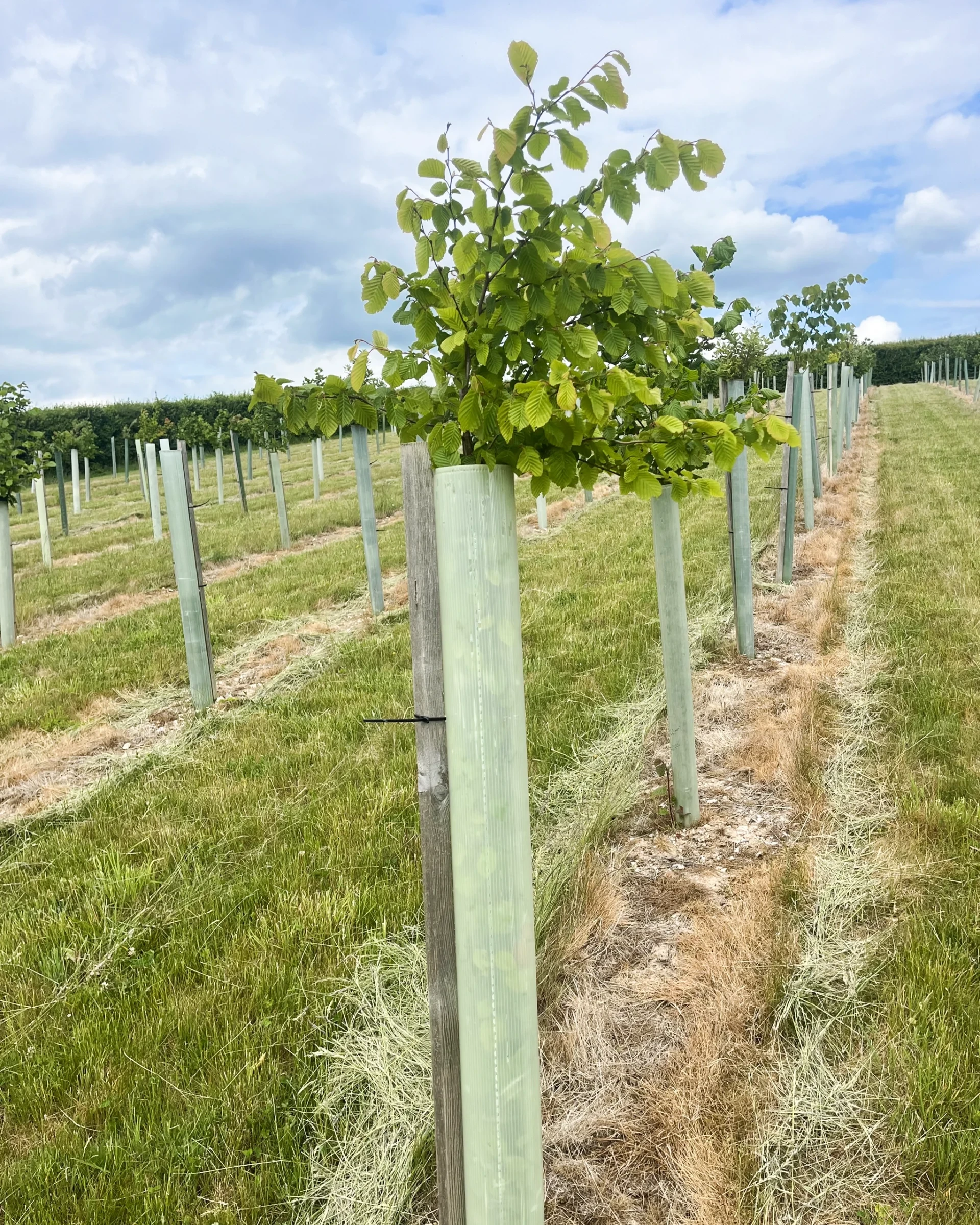
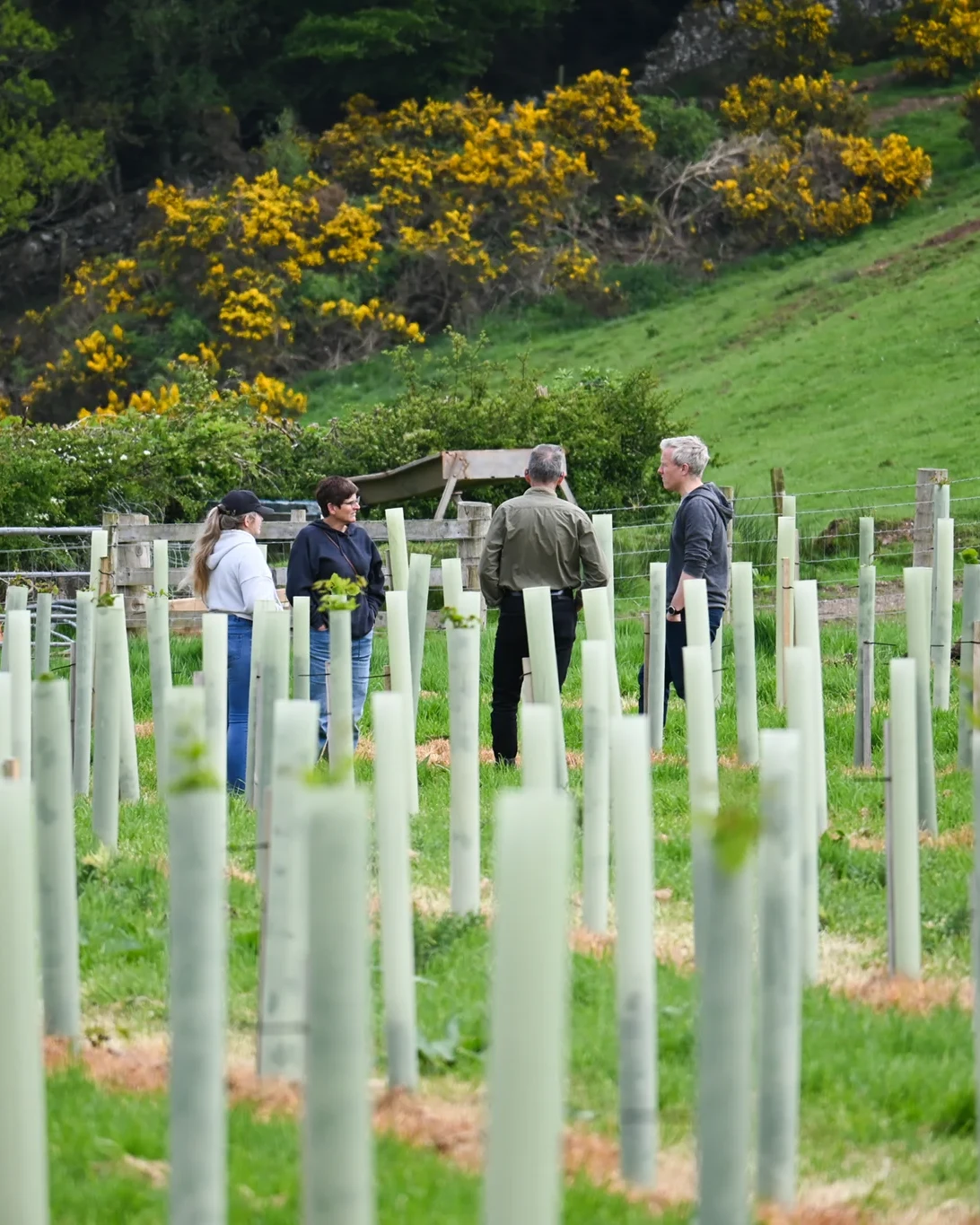
Worldwide Truffle Plantation Establishment
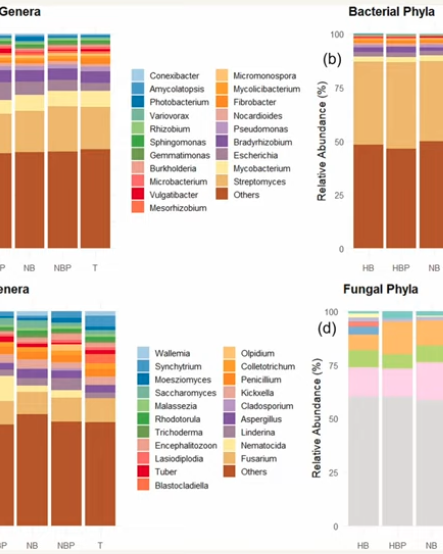
Our truffle consultancy services include advanced soil analysis and root testing, helping you ensure that your plantation site is in optimal condition leading up to your first truffle harvest. These assessments are critical for long-term success and help maximise truffle yields. We also offer DNA analysis to confirm truffle species, out with our own orchards, or from wild truffle sites.
Truffle Cultivation
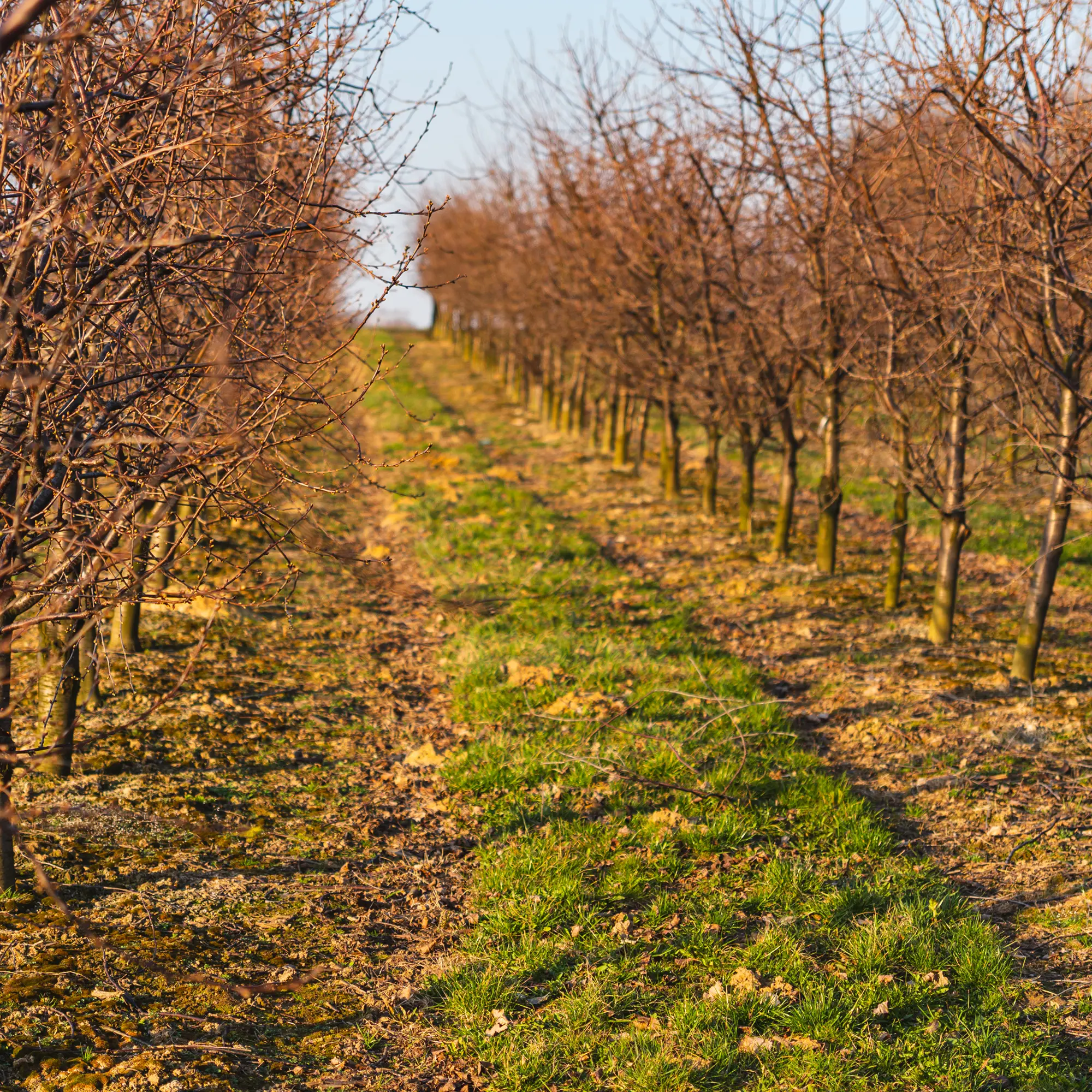
Truffle cultivation is an environmentally friendly way to add value to underused or marginal land. With strong global demand for truffles and established routes to market through our distribution network, your harvest has a ready-made path to profitability.
Explore Truffle Farming
Whether you're looking for farm diversification, sustainable income from tree planting, or expert advice on starting a truffle orchard, Mycorrhizal Systems provides everything you need to succeed. Let’s explore how truffle farming can work for your land.
Testimonials
I have worked with Paul and the team for about 15 years. Paul’s technical knowledge and experience is unrivalled, and we would not find better. The team are always quick to support on the occasion when guidance is needed. The sale of truffles is smooth and efficient. So five stars all round!” – MSL truffle growing partner.
I've been a partner with Mycorrhizal Systems for over 15 years, when I planted my trees and set about being truffle grower. Paul and the team have been very supportive throughout the process: testing soils samples, advising on maintenance and connecting me with people who can support this venture - from other growers to dog trainers!
Since going 'into production' the team are now working hard to sell the produce. Having as single 'wholesaler' to deal with this has proved to be an efficient way to complete the process and it's very rewarding to now see (and taste) the fruits of our labour!” - MSL truffle growing partner.
Innovating Truffle Farming Worldwide
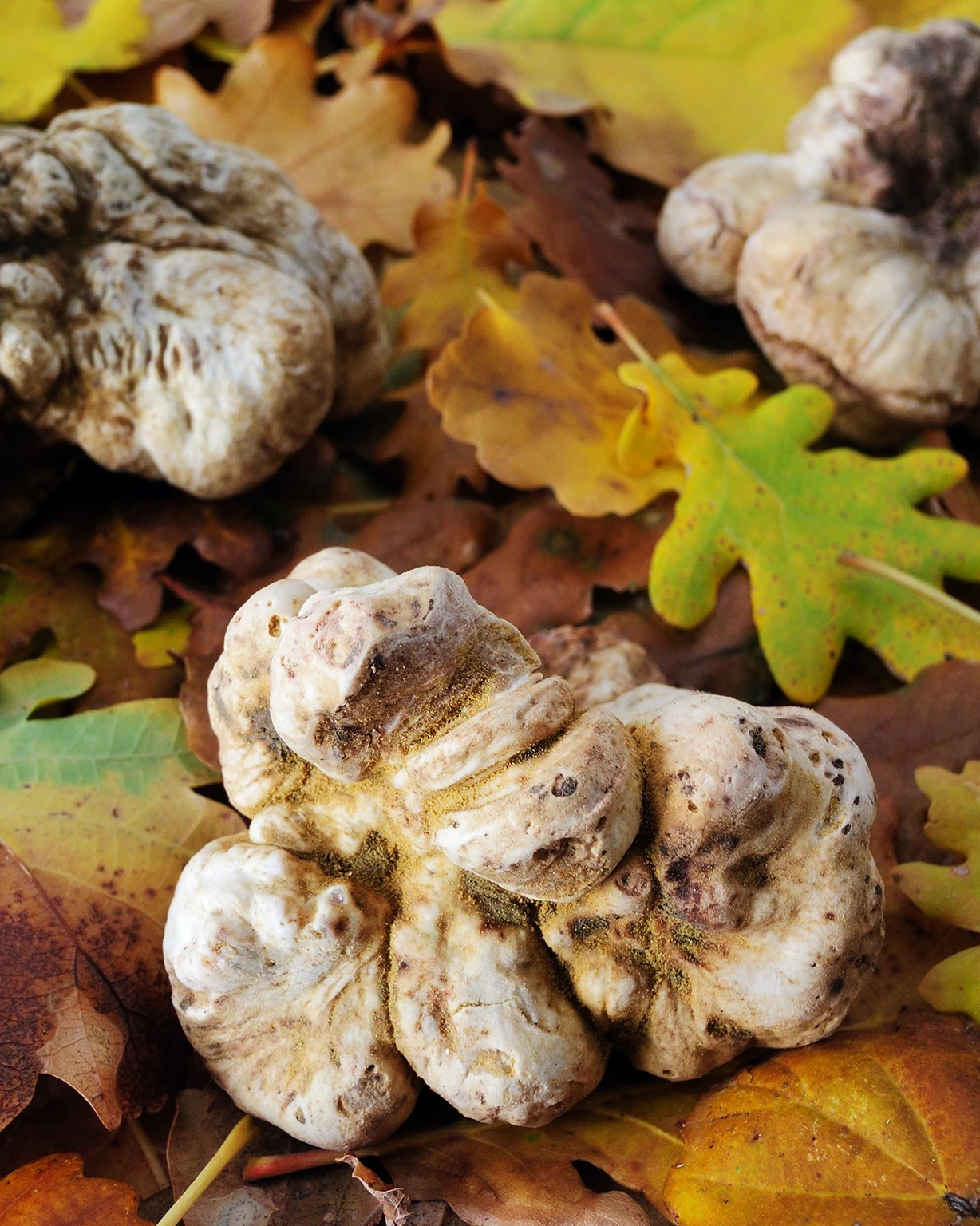
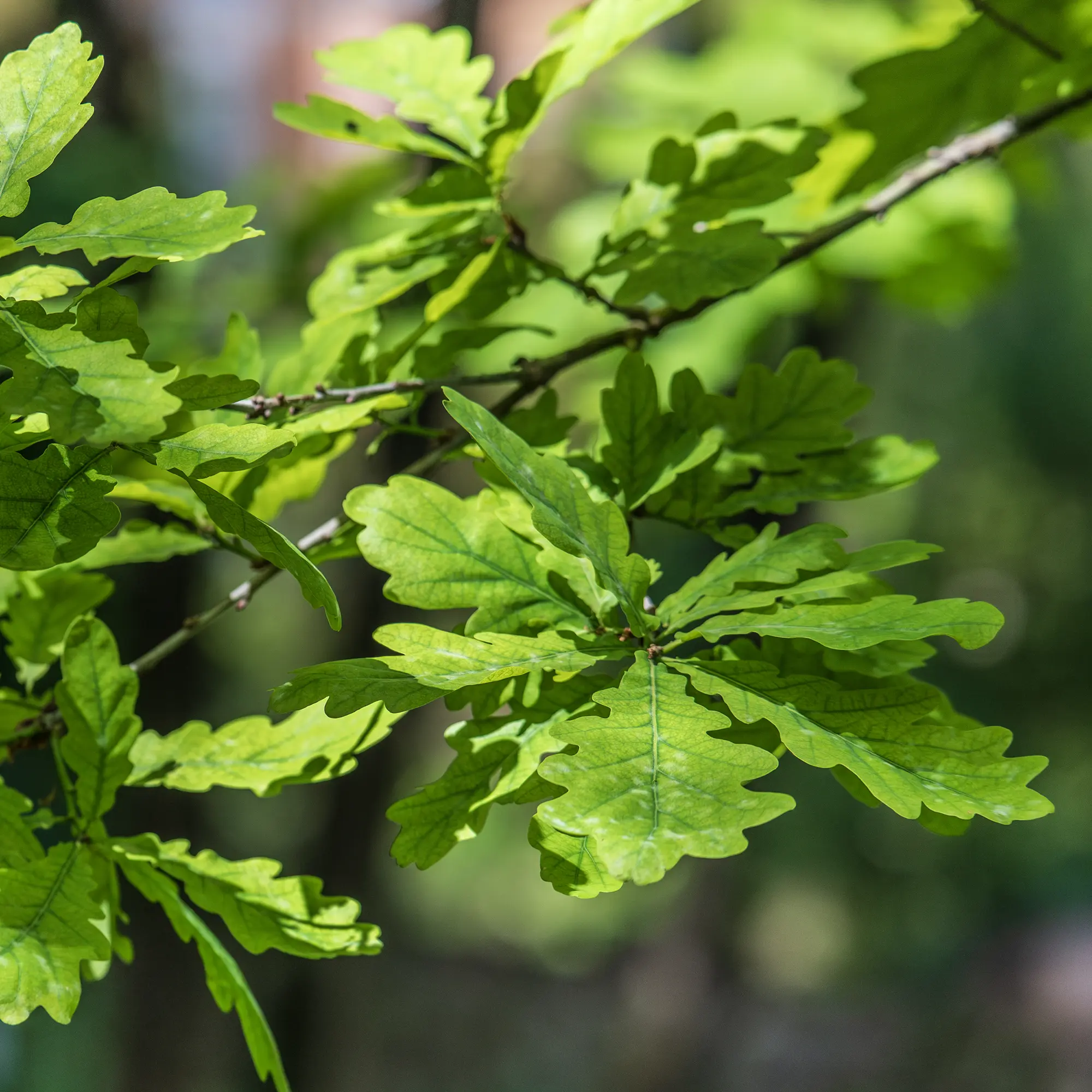
We primarily offer the following tree species: Hazel, English Oak, and Evergreen Oak- although of bespoke orders we can work with a much wider species range. These trees can be inoculated with either summer/autumn truffle or winter truffle. Additionally, we have a limited number of trees inoculated with White truffles available.
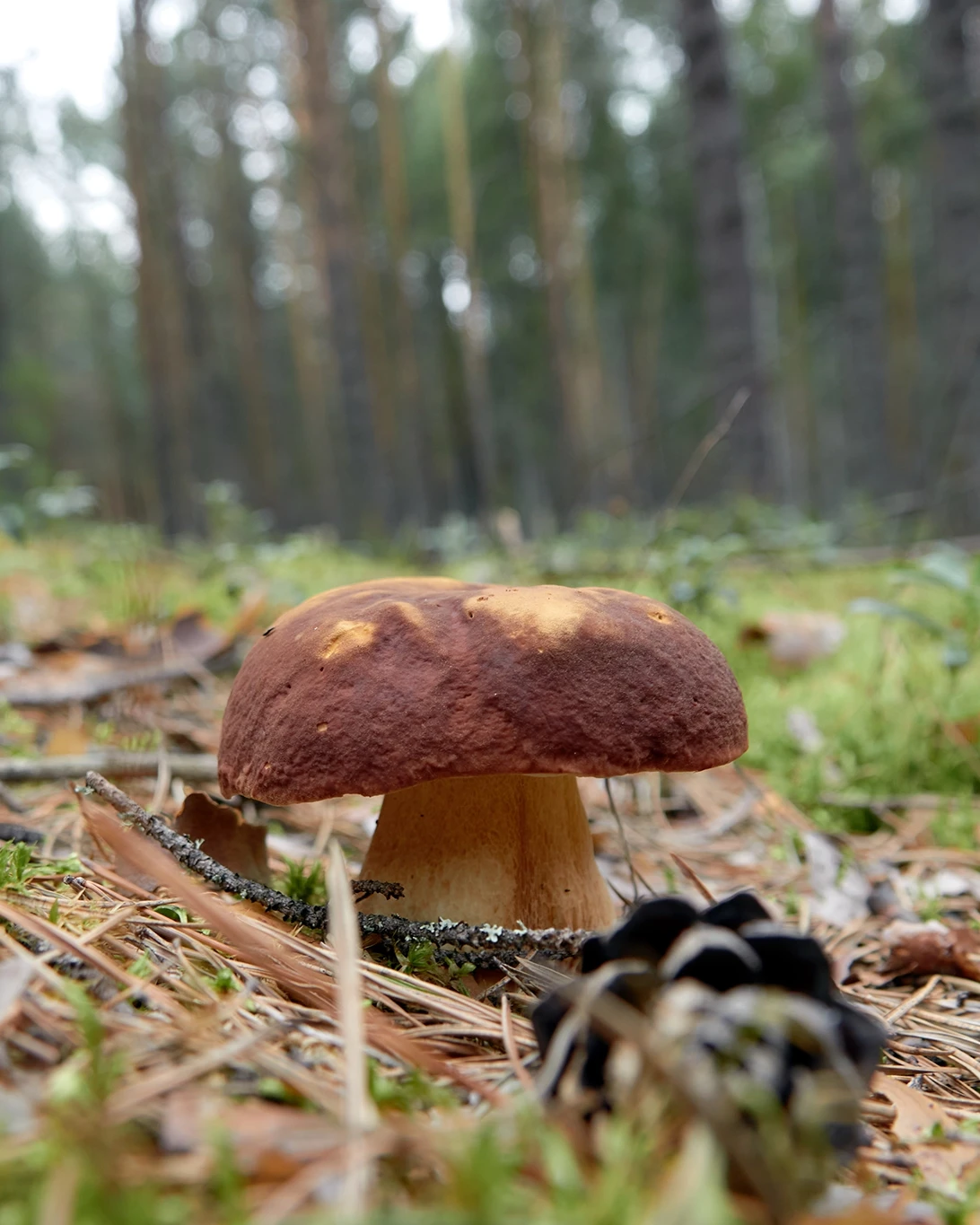
Supported by UKRI, our research team have developed a range of trees inoculated with other edible mushroom species- these can be used for back-garden plantings or even on a commercial scale to combine commercial forestry with a carbon negative food crop! Here we work with commercial species, such as Scots pine or Sitka spruce.
While it is theoretically possible, our trials have shown that inoculating mature trees is both costly and challenging. The success rate is only about 15%, and it may take decades—if ever—for truffles to develop. For this reason, we encourage people to focus on new plantings which are much more reliable.
Yes, there are several grant opportunities available for planting mixed broadleaf woodlands. Our recommended planting density of 1,600 trees per hectare typically meets most grant criteria. However, we recommend consulting with the Forestry Commission or a similar authority for the most current information. We’re also happy to assist you with details to support your grant application.
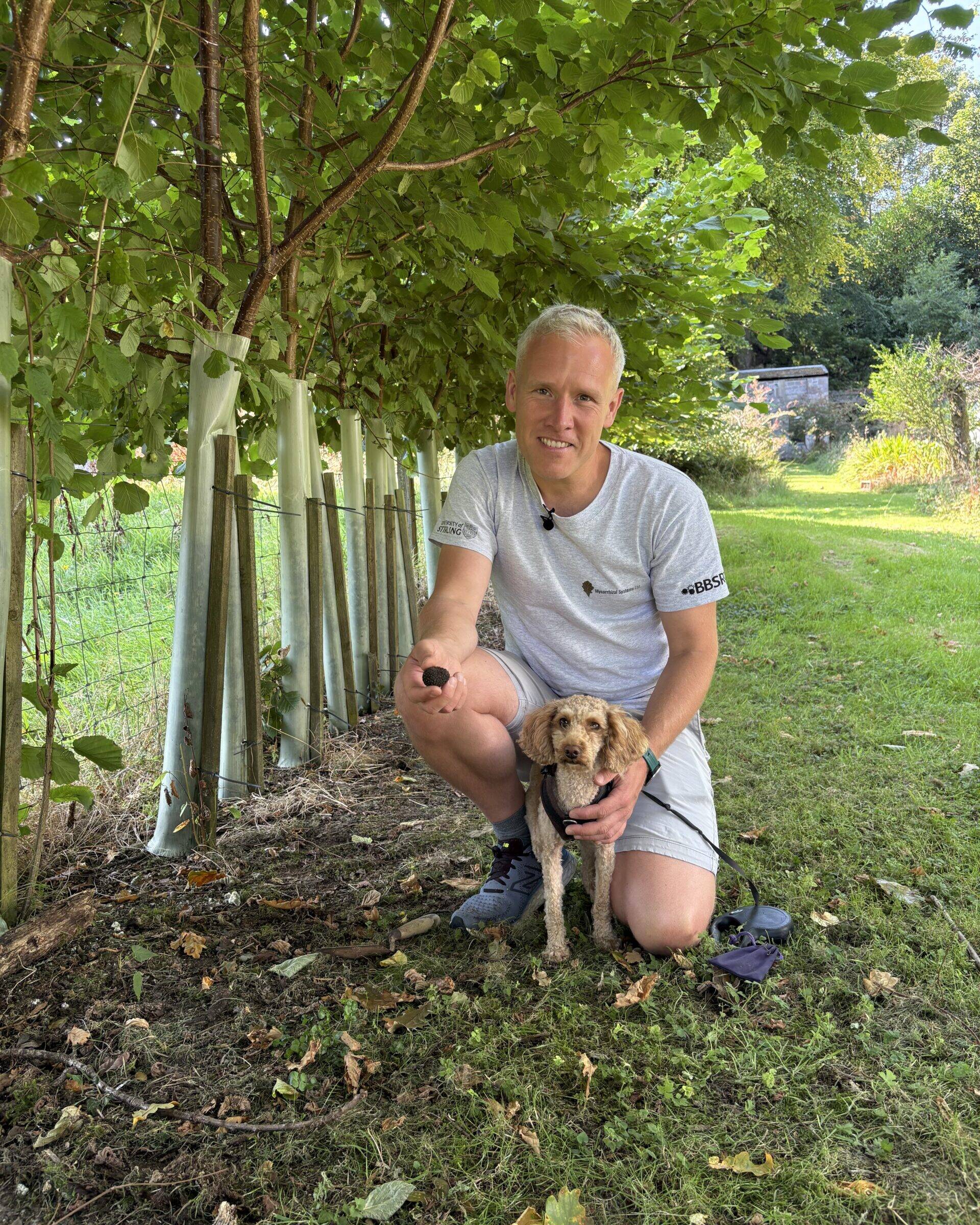
We don’t offer in-house dog training, but we can provide useful tips and even some fresh or frozen truffles to help you get started with scent training. Additionally, we have excellent contacts for professional dog training courses that we can share with you.
In the UK, the average time to first production is around six years after planting. However, this can vary based on factors like site maintenance, the consistency of truffle hunting, and the experience of your trained truffle dog. Keep in mind that every site is different, and it may take longer than six years before you find your first truffle. Your soil type and climate are also important, and we can help guide you to set expectations.
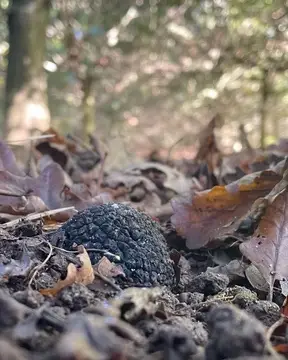
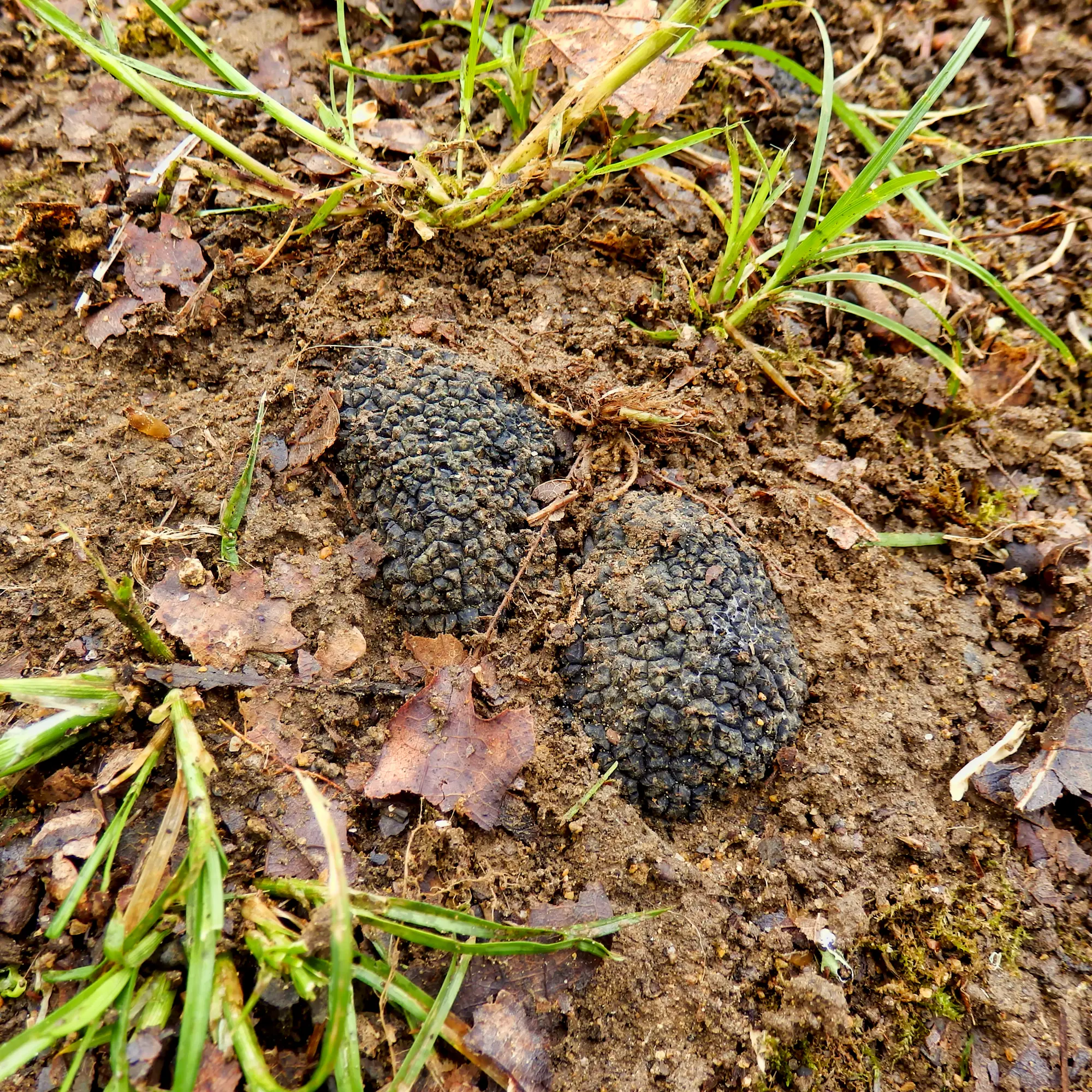
Truffles are rare fungi that grow underground in partnership with tree roots. Their unique aroma and taste make them highly sought after in fine cuisine. Some species, like the black Périgord truffle, can fetch thousands of pounds per kilo.
To cultivate truffles, you’ll need:
• Land with suitable soil and climate
• Inoculated trees (we provide these)
• Long-term management and care
• Patience (harvest typically begins after 6 years in the UK)
We’ll help you determine if your land is suitable and walk you through every step of the process.
We supply trees inoculated with:
• Périgord Black Truffle (Tuber melanosporum)
• Summer/Autumn Truffle (Tuber aestivum syn. uncinatum )
• White Truffle (tuber magnatum)
Other species may be available based on your region.
Tuber aestivum (commonly known as the Summer Truffle) and Tuber uncinatum (often called the Burgundy Truffle) are genetically the same species. While once considered separate due to differences in aroma, flavour, and harvest season, DNA analysis confirms that they are variants of the same fungus.The differences are mainly environmental
Success depends on soil quality, climate, and proper care. With good planning and support, truffle farming can be highly rewarding. Our science-backed methods significantly improve your chances of success.
Most orchards begin producing truffles within 6–7 years. First production in the UK tends to be from year 6. Early results vary depending on species, maintenance, and environmental conditions.
Yes. The UK has many regions with ideal soil and climate conditions. We’ll evaluate your site and recommend the best truffle species for your location.
Absolutely. Our post-planting services include:
• Soil and root testing to make sure the site stayed optimal for truffle cultivation
• Maintenance guidance – weed control etc.
• Harvesting support
• Truffle dog training resources
• Ongoing consultation
Yes—truffle farming offers strong long-term return potential. However, it’s a long-term investment that requires commitment. We provide realistic projections and guidance to help you plan for profitability.
Get in touch for a site consultation. We’ll assess your land, advise on land preparations, make species recommendation and arrange timelines for delivery of tested, inoculated trees.
Latest Press Releases